Exploring the Cultural Significance of Important Days and Events in Bali
Bali is one of Indonesia’s most culturally distinctive islands, known for its living traditions, temple ceremonies, art, music, and community rituals. Important days and events in Bali are not just holiday markers. They are expressions of Balinese identity, spirituality, and social life.
The Balinese use two traditional calendars. The Pawukon calendar runs on a 210-day cycle and shapes many temple anniversaries and ritual days. The Saka calendar, inherited from Indian tradition, follows lunar cycles and determines key observances such as Nyepi, the Balinese Day of Silence.
For travelers, these ceremonies offer a rare opportunity to experience Bali beyond beaches and resorts. For residents, they are an essential part of daily life, family duty, and village continuity.
Pawukon (210-day cycle) and Saka (lunar calendar)
Nyepi, Bali’s Day of Silence
Observe respectfully, dress appropriately, and follow local guidance
Why Important Days in Bali Matter
Bali is a culturally rich destination where religious and ceremonial life remains highly visible. Visitors can witness temple anniversaries, processions, purification rites, offerings, and major annual observances that reflect the island’s spiritual worldview.
Many events are open to respectful observation, but exact dates can vary depending on the temple, village, and calendar interpretation. This is especially true for Odalan, since each temple has its own anniversary in the Pawukon cycle.
Read also on Villa Carissa Bali
Explore temple culture further in
Best Temples in Bali | Must Visit at Least One During Your Stay.
Important Days in Bali: The Main Ceremonies and Festivals
Odalan
Odalan is the temple anniversary ceremony. It takes place every 210 days according to the Pawukon calendar. Each temple has its own Odalan date, so ceremonies happen throughout the year across Bali.
Galungan and Kuningan
These ceremonies celebrate the triumph of good over evil and the return of ancestral spirits. Penjor bamboo poles line the roads, homes prepare offerings, and temple visits intensify.
Saraswati and Pagerwesi
Saraswati honors knowledge, literature, and learning. Pagerwesi follows shortly after and emphasizes spiritual protection and the safeguarding of wisdom.
Melasti, Nyepi, and Ngembak Geni
These three observances form a powerful sequence of purification, silence, and renewal, culminating in Bali’s most famous annual spiritual day.
Odalan: Temple Anniversary Ceremonies in Bali
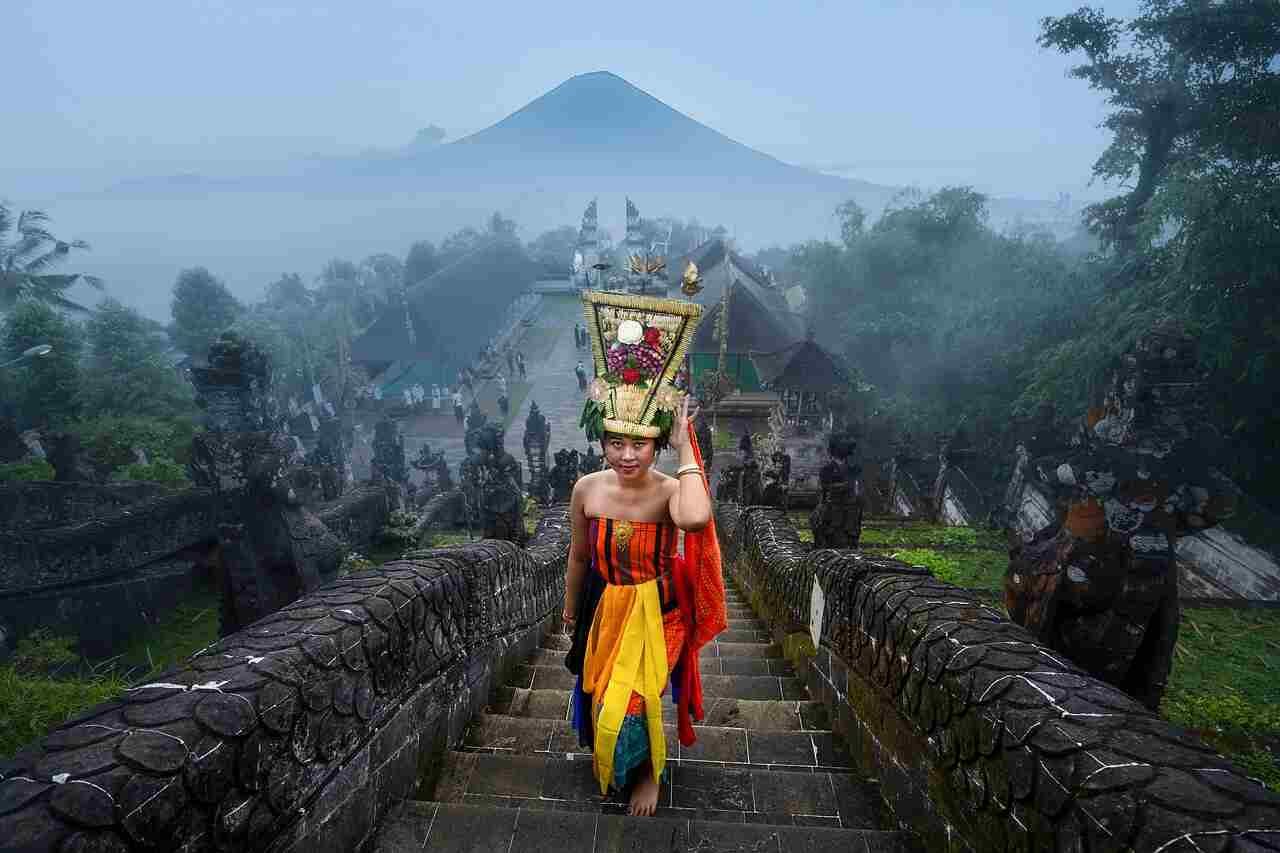
Odalan is a traditional Balinese Hindu ceremony held to celebrate the anniversary of a temple’s foundation or purification. Because Bali has thousands of temples, Odalan ceremonies are frequent and spread across the island all year long.
During Odalan, villagers wear traditional dress, bring offerings, gather in prayer, and decorate temples with flowers, cloth, and ceremonial ornaments. Holy water is sprinkled on worshippers, and blessed rice may be placed on the forehead and throat as part of the ritual.
Rather than publishing old fixed date lists that may now be inaccurate, it is better to confirm a specific temple’s Odalan locally, especially if you want to visit major sites such as Tanah Lot, Besakih, or Ulun Danu Bratan.
Internal Bali links
Learn more in
Bali Heritage and Culture | Balinese Traditions
and
Best Temples in Bali.
Galungan and Kuningan
Galungan celebrates the victory of Dharma over Adharma, or good over evil. During this period, Balinese families prepare offerings, pray together, and welcome ancestral spirits.
Kuningan takes place ten days after Galungan and marks the closing of this sacred period. Bali’s roads are often lined with decorated penjor, tall bamboo poles that can rise several meters high. In many areas these arches reach roughly 5 to 10 m, or about 16.4 to 32.8 ft, depending on the household and local style.
Galungan
A major ceremony of renewal, family gathering, and temple devotion.
Kuningan
The conclusion of the Galungan cycle, associated with purification and the departure of ancestral spirits.
- Galungan: Wednesday, 17 June 2026
- Kuningan: Saturday, 27 June 2026
Saraswati
Saraswati is dedicated to the goddess of knowledge, learning, literature, music, and art. Books and sacred texts are honored, students pray at school temples, and holy water is used in blessings.
This day is particularly meaningful for children, teachers, artists, and scholars. It highlights one of the most beautiful dimensions of Balinese Hinduism: the reverence for knowledge as a sacred force.
- Saraswati: Saturday, 4 April 2026
Tumpek Ceremonies
Tumpek refers to a recurring series of Balinese Hindu holy days in the 210-day Pawukon cycle. Different Tumpek observances honor different parts of life, including animals, trees, metal tools, puppets, music, and ritual objects.
- Tumpek Landep: homage to metal objects and tools
- Tumpek Kandang: blessings for animals
- Tumpek Wayang: linked to puppets and shadow traditions
- Tumpek Uduh: blessings for plants and harvests
- Tumpek Krulut: dedicated to music, art, and feeling
Because Tumpek dates follow the Pawukon cycle, they recur more often than annual Gregorian holidays and are best checked against a current Balinese calendar for the exact observance you want to follow.
Related reading
See also
Hindu Gods and Goddesses in Bali.
Pagerwesi
Pagerwesi means “iron fence” or “iron barrier.” It symbolizes spiritual strength, protection, and the safeguarding of knowledge. The day comes shortly after Saraswati, which is why the two are often discussed together.
On Pagerwesi, offerings and prayers are directed toward protecting humanity from harmful influences. Families may pray in home shrines, village temples, or larger public temples.
- Wednesday, 8 April 2026
- Wednesday, 4 November 2026
Melasti
Melasti is the great purification ritual held before Nyepi. Sacred objects from temples are carried in procession to the sea, lakes, or springs for cleansing and blessing. For many visitors, this is one of Bali’s most visually moving ceremonies.
During Melasti, processions can extend for several kilometers, which may be roughly 1.2 to 3.1 mi if the procession route is about 2 to 5 km. Traditional white ceremonial clothing is commonly worn as a symbol of purity.
If you are in Bali during Melasti, beaches and water temples are often the best places to respectfully observe the processions.
- Melasti: Wednesday, 18 March 2026
Nyepi: Bali’s Day of Silence
Nyepi is the Balinese Hindu New Year and one of the most extraordinary public observances in the world. On Nyepi, Bali falls silent for 24 hours. Roads empty, the airport closes, most activity stops, and residents remain indoors.
The evening before Nyepi, villages hold noisy ogoh-ogoh parades featuring giant demon effigies. These figures are often several meters tall and can easily exceed 2 to 4 m, or about 6.6 to 13.1 ft, depending on the local community’s construction.
Nyepi itself is devoted to silence, reflection, self-restraint, and spiritual reset. For travelers, it requires planning, but it can also become one of the most memorable experiences in Bali.
- 2026: Thursday, 19 March 2026
- 2027: Monday, 8 March 2027
- 2028: Sunday, 26 March 2028
- 2029: Thursday, 15 March 2029
- 2030: Tuesday, 5 March 2030
Ngembak Geni
Ngembak Geni takes place the day after Nyepi and marks the return to normal social life. It is associated with forgiveness, reconciliation, family visits, and starting anew after the day of silence.
It is not another silent day. Instead, it is a day of reconnection, visits, and renewed social harmony.
- Ngembak Geni: Friday, 20 March 2026
Omed-Omedan Festival
Omed-Omedan is a unique post-Nyepi tradition associated with Sesetan in Denpasar. Often described in tourism media as a kissing or pull-and-push festival, it is fundamentally a community ritual connected with youth participation, social bonding, and local heritage.
It takes place after Nyepi and has become one of Bali’s most distinctive urban cultural events. If you plan to attend, expect crowds and follow local instructions closely.
- Omed-Omedan: Friday, 20 March 2026
August 17: Indonesian Independence Day
Bali also celebrates Indonesia’s Independence Day every year on 17 August. Although it is a national rather than specifically Balinese religious holiday, it is widely observed with flags, ceremonies, school events, and patriotic decorations.
This celebration offers visitors another way to see how local identity and national identity coexist in Bali.
Related cultural reading
Continue with
Bali Arts Festival in Denpasar
and
Bali Heritage and Culture.
FAQ: Important Days and Events in Bali
What is the most important cultural day in Bali?
Nyepi is one of the most important and distinctive observances in Bali, but Galungan, Kuningan, Melasti, Saraswati, and major temple Odalan ceremonies are also highly significant.
Do ceremony dates in Bali change every year?
Yes. Many dates are determined by the Pawukon or Saka calendars, so they do not align consistently with the Gregorian calendar.
Can tourists watch ceremonies in Bali?
Often yes, but respectfully. Dress modestly, do not block processions, ask before entering sacred areas, and follow local instructions.
Why is Odalan harder to date than Nyepi?
Because every temple has its own anniversary. Odalan is temple-specific, while Nyepi is island-wide.
Have You Booked Your Villa in Seminyak Center?
After discovering Bali’s ceremonies, temple culture, and annual festivals, stay in a peaceful private villa in Seminyak with quick access to beaches, restaurants, and the island’s cultural attractions.
Learn more about Villa Carissa
Discover the private villa, enclosed garden, and swimming pool in the heart of Seminyak.
Plan your stay
Check availability and current offers for your next Bali holiday.
Located in Seminyak Center, Villa Carissa offers a private swimming pool and enclosed garden for a peaceful and private Bali stay.
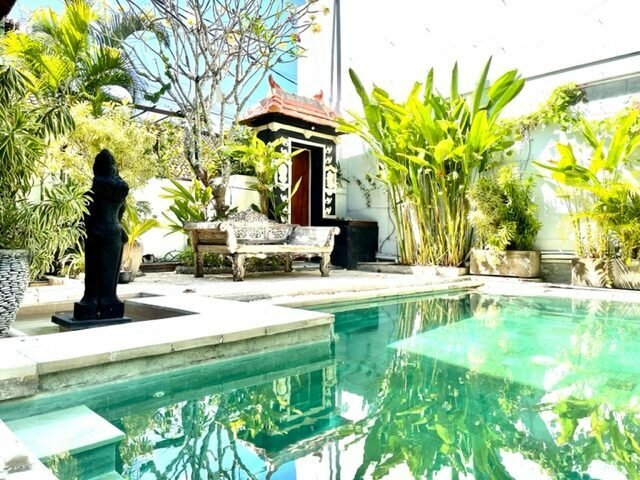
Villa Carissa in Seminyak Center.
